
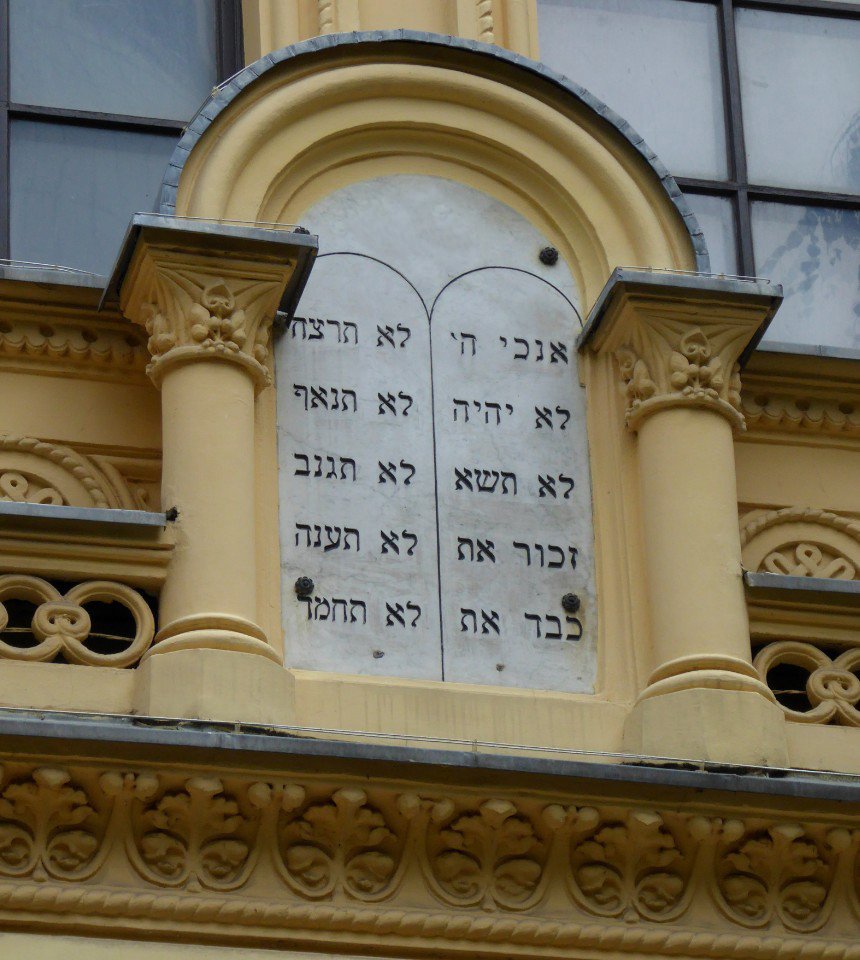
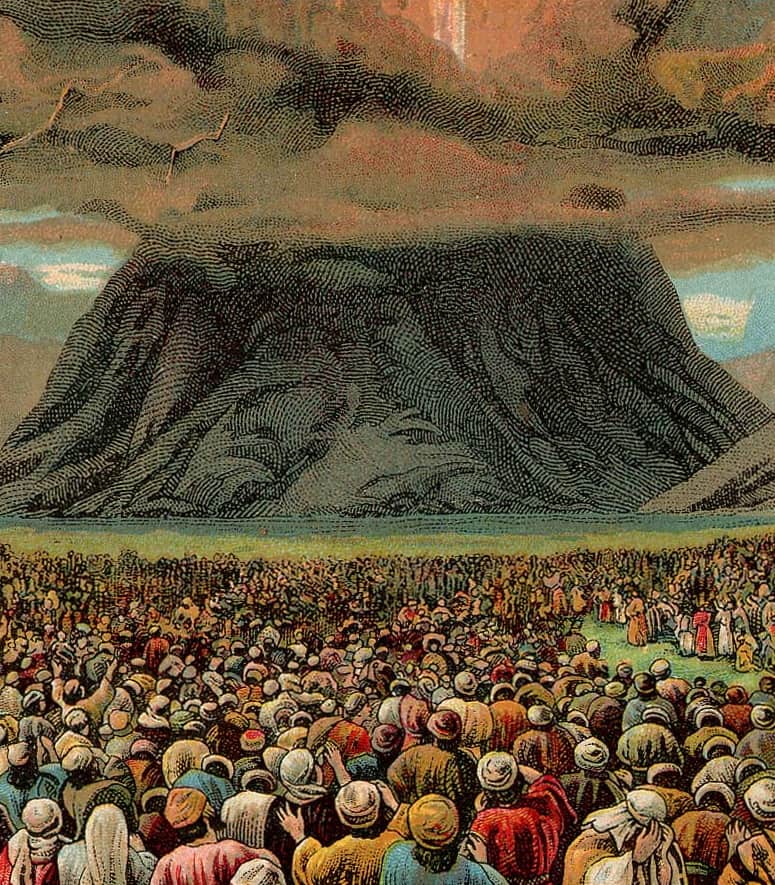
The Ten Commandments are the ten laws God spoke aloud from Mount Sinai and wrote with His own finger on two tablets of stone (Exodus 20:1-17; 31:18). The first four show us how to love God. The last six show us how to love other people.
But the Ten Commandments are more than rules.
They describe what God is like, and what His people become when His law is written on their hearts. James calls them the perfect law of liberty (James 1:25), because keeping them sets us free from the wages of sin. Free from hurting each other.
This page is the starting point for our full Bible study series on the commandments. Below you’ll find all ten, where they came from, why they still matter. See how they fit with grace.
Download the free Ten Commandments study map
All ten on one page, with key verses, New Testament references, and a 10-week family study plan.
The Ten Commandments at a glance
| # | The commandment (KJV) | What it protects |
|---|---|---|
| 1 | Thou shalt have no other gods before me. | Our worship of God alone |
| 2 | Thou shalt not make unto thee any graven image. | The way we worship |
| 3 | Thou shalt not take the name of the LORD thy God in vain. | God’s name and character |
| 4 | Remember the sabbath day, to keep it holy. | God’s holy time |
| 5 | Honour thy father and thy mother. | The family |
| 6 | Thou shalt not kill. | Human life |
| 7 | Thou shalt not commit adultery. | Marriage |
| 8 | Thou shalt not steal. | Property |
| 9 | Thou shalt not bear false witness against thy neighbour. | Truth and reputation |
| 10 | Thou shalt not covet. | The heart |
The full text: Exodus 20:1-17
1 And God spake all these words, saying, 2 I am the LORD thy God, which have brought thee out of the land of Egypt, out of the house of bondage.
3 Thou shalt have no other gods before me.
4 Thou shalt not make unto thee any graven image, or any likeness of any thing that is in heaven above, or that is in the earth beneath, or that is in the water under the earth. 5 Thou shalt not bow down thyself to them, nor serve them: for I the LORD thy God am a jealous God, visiting the iniquity of the fathers upon the children unto the third and fourth generation of them that hate me; 6 And shewing mercy unto thousands of them that love me, and keep my commandments.
7 Thou shalt not take the name of the LORD thy God in vain; for the LORD will not hold him guiltless that taketh his name in vain.
8 Remember the sabbath day, to keep it holy. 9 Six days shalt thou labour, and do all thy work: 10 But the seventh day is the sabbath of the LORD thy God: in it thou shalt not do any work, thou, nor thy son, nor thy daughter, thy manservant, nor thy maidservant, nor thy cattle, nor thy stranger that is within thy gates: 11 For in six days the LORD made heaven and earth, the sea, and all that in them is, and rested the seventh day: wherefore the LORD blessed the sabbath day, and hallowed it.
12 Honour thy father and thy mother: that thy days may be long upon the land which the LORD thy God giveth thee.
13 Thou shalt not kill.
14 Thou shalt not commit adultery.
15 Thou shalt not steal.
16 Thou shalt not bear false witness against thy neighbour.
17 Thou shalt not covet thy neighbour’s house, thou shalt not covet thy neighbour’s wife, nor his manservant, nor his maidservant, nor his ox, nor his ass, nor any thing that is thy neighbour’s.
The commandments appear a second time in Deuteronomy 5:6-21, when Moses repeated them to the next generation before they entered Canaan.
Two tables: love to God, love to neighbor
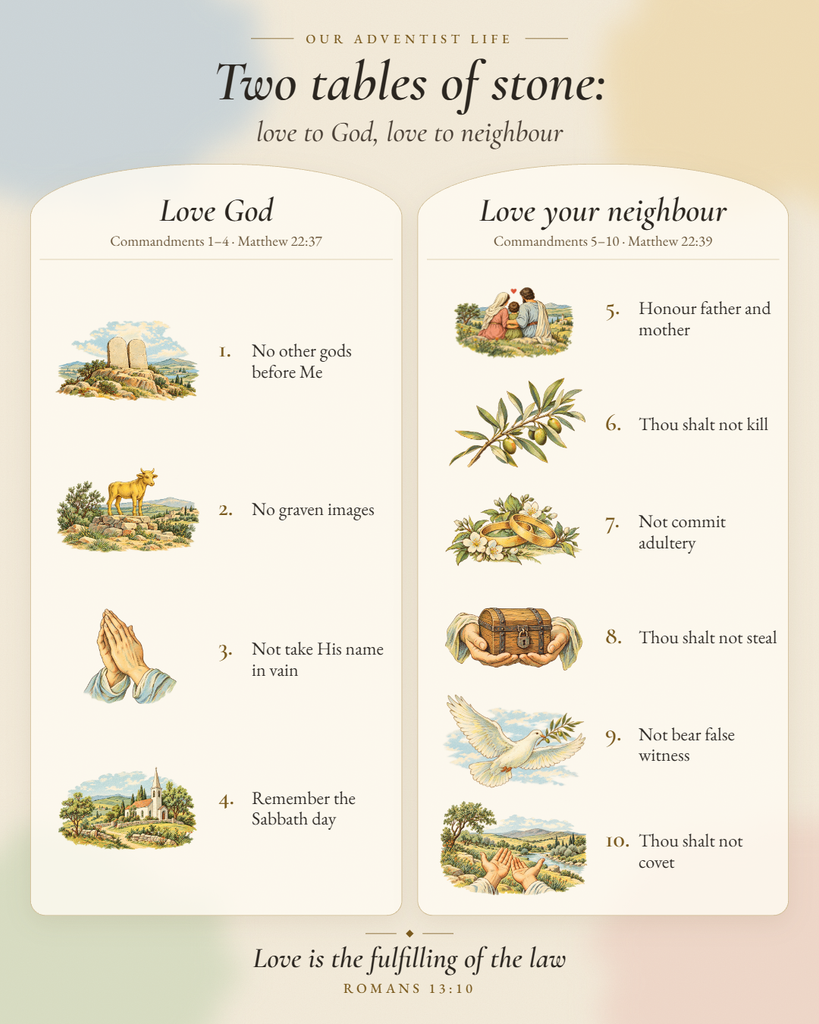
When a lawyer asked Jesus which commandment was greatest, Jesus summed up the whole law in two: love God with all your heart, soul, and mind, and love your neighbor as yourself. “On these two commandments hang all the law and the prophets” (Matthew 22:35-40).
Those two great commandments match the two halves of the Ten.
The first four describe what love to God looks like: worshiping Him alone, worshiping Him rightly, honoring His name, and keeping His holy day.
The last six describe what love to others looks like: honoring parents and protecting life, marriage, property, truth, and the heart.
Paul made the same connection.
After listing several of the commandments, he wrote, “Love worketh no ill to his neighbour: therefore love is the fulfilling of the law” (Romans 13:8-10).
Love doesn’t replace the commandments. It’s what keeping them looks like.
Did the Ten Commandments exist before Sinai?
Many people assume God’s law began at Sinai, so it must belong to the Israelites alone. But Scripture shows God’s people knew His law long before Moses climbed the mountain.
Paul gives the logic: “where no law is, there is no transgression” (Romans 4:15). Yet sin and death reigned from Adam to Moses (Romans 5:12-14). If people sinned before Sinai, a law already existed. God even said Abraham “kept my charge, my commandments, my statutes, and my laws” (Genesis 26:5).
In fact, every one of the ten appears in Genesis or early Exodus:
| # | Commandment | Evidence before Sinai |
|---|---|---|
| 1 | No other gods | Jacob told his household, “Put away the strange gods” (Genesis 35:2-4) |
| 2 | No graven images | Jacob buried his household’s idols under an oak (Genesis 35:4) |
| 3 | God’s name | Job feared his children had cursed God in their hearts, and refused to curse God and sin with his lips (Job 1:5; 2:9-10). |
| 4 | The Sabbath | God blessed the seventh day at creation, and Israel kept it before Sinai (Genesis 2:2-3; Exodus 16:23-30) |
| 5 | Honor parents | Shem and Japheth honored their father, while Ham dishonored him (Genesis 9:20-27) |
| 6 | Don’t kill | God judged Cain for murdering Abel (Genesis 4:8-11; 9:6) |
| 7 | Don’t commit adultery | Joseph refused Potiphar’s wife and wouldn’t sin against God (Genesis 39:9) |
| 8 | Don’t steal | Joseph’s brothers protested, “how then should we steal … silver or gold?” (Genesis 44:8) |
| 9 | Don’t bear false witness | The serpent’s lie brought sin into the world, and Jesus called the devil the father of lies (Genesis 3:4; John 8:44) |
| 10 | Don’t covet | Sin began when Eve saw the forbidden fruit and desired taking something that wasn’t hers (Genesis 3:6) |
Thus, God’s law wasn’t created at Sinai. It was put in writing what God had always required, so His people would never have to guess.
How God gave His law: two laws, two places
The way God gave the Ten Commandments set them apart from every other law in the Old Testament.
- God spoke them Himself, aloud, to the whole nation. Roughly 1.5-2 million people heard God. “These words the LORD spake unto all your assembly …” (Deuteronomy 5:22).
- God wrote them Himself, “with the finger of God,” on stone (Exodus 31:18; 32:16). When Moses broke the first tablets, God wrote them again (Exodus 34:1).
- God had them placed inside the ark, the most sacred object in the sanctuary (Deuteronomy 10:1-5). Over the ark sat the mercy seat, where God promised to meet His people (Exodus 25:21-22). God’s law sat beneath His mercy.
Moses, by contrast, wrote the other laws, including the ceremonial laws about sacrifices and feasts, in a book. That book was placed in the side of the ark, not inside it (Deuteronomy 31:24-26).
Adventists see this as an important distinction:
| The Ten Commandments | The ceremonial law of Moses | |
|---|---|---|
| Spoken by | God Himself (Deuteronomy 5:22) | God through Moses (Leviticus 1:1-2) |
| Written by | The finger of God, on stone (Exodus 31:18) | Moses, in a book (Deuteronomy 31:24) |
| Kept | Inside the ark (Deuteronomy 10:5) | Beside the ark (Deuteronomy 31:26) |
| Purpose | Shows God’s character and defines sin (Romans 7:7, 12) | Sacrifices and ceremonies that pointed to Christ (Hebrews 10:1) |
| After the cross | Still in force (Romans 3:31; Revelation 14:12) | Fulfilled in Christ, so the shadows ended (Colossians 2:16-17; Hebrews 9:9-12) |
Israel also had civil laws, which governed the nation and its courts. Those belonged to Israel’s government under God’s direct rule.
This distinction explains a lot.
When the New Testament says certain laws ended at the cross, it’s talking about the sacrifices and ceremonies that pointed forward to Jesus. When the Lamb of God died, the lambs on the altar were no longer needed. But nothing about the cross made it acceptable to worship idols, steal, or lie.
The moral law describes God’s character, and His character doesn’t change (Malachi 3:6; Fundamental Belief 19).
Why is it called the law of liberty?
James calls God’s law the perfect law of liberty (James 1:25), and quotes the commandments as part of the law of liberty (James 2:8-12).

How can a law make anyone free?
Scripture gives four answers.
- It shows us what God is like. “The law is holy, and the commandment holy, and just, and good” (Romans 7:12). Those are words that describe God Himself. The commandments are a written picture of His character.
- It shows us the truth about ourselves. James compares the law to a mirror. It shows what we really look like, and the person who keeps looking into it and acts on it shall be blessed (James 1:23-25). Paul said, “I had not known sin, but by the law” (Romans 7:7). The law defines sin: “sin is the transgression of the law” (1 John 3:4).
- It leads us to Jesus. A mirror can show you a dirty face, but it can’t wash it. The law shows us our need, and then points us to the only One who can meet it (Galatians 3:24; Romans 3:20-24).
- It protects our freedom. Sin promises freedom but delivers slavery: “Whosoever committeth sin is the servant of sin” (John 8:34). God’s law works like guardrails on a mountain road. They don’t stop you from driving. They keep you from going over the edge. That’s why the psalmist could say, “I will walk at liberty: for I seek thy precepts” (Psalm 119:45).
The law and grace: root or fruit?
If the commandments still matter, does that mean we’re saved by keeping them?
No. Scripture is clear on both sides of this question.
We aren’t saved by keeping the law. “By the deeds of the law there shall no flesh be justified in his sight” (Romans 3:20). “For by grace are ye saved through faith; and that not of yourselves: it is the gift of God: not of works, lest any man should boast” (Ephesians 2:8-9).
Jesus paid the penalty our sins earned: “the wages of sin is death; but the gift of God is eternal life through Jesus Christ our Lord” (Romans 6:23).
But we are saved to keep it.
In Ephesians 2:10 it says we are “created in Christ Jesus unto good works” Paul asked, “Do we then make void the law through faith? God forbid: yea, we establish the law” (Romans 3:31). Christ came “that the righteousness of the law might be fulfilled in us, who walk not after the flesh, but after the Spirit” (Romans 8:3-4).
Think of a fruit tree.
Obedience isn’t the root of salvation; it’s the fruit. We don’t keep the commandments to be saved.
We keep them because we’ve been saved, and because the Holy Spirit is changing us. “If ye love me, keep my commandments” (John 14:15). “For this is the love of God, that we keep his commandments: and his commandments are not grievous” (1 John 5:3).
That’s why Jesus, after forgiving a woman caught in adultery, didn’t say sin a little less. He said, “go, and sin no more” (John 8:11).
Forgiveness and a changed life go together.
Aren’t the Ten Commandments the old covenant?
This is one of the most common objections. The answer depends on understanding what was old about the old covenant.
At Sinai, God offered His covenant, and the people answered, “All that the LORD hath spoken we will do” (Exodus 19:5-8; 24:3, 7). Within weeks, they were dancing around a golden calf. Hebrews explains what went wrong: “finding fault with them” (Hebrews 8:8).
The problem was never the law. It was a covenant resting on human promises.
So God promised a new covenant, and Hebrews quotes it directly: “I will put my laws into their mind, and write them in their hearts: and I will be to them a God, and they shall be to me a people” (Hebrews 8:10; Jeremiah 31:33).
Notice what the new covenant does with the law.
It doesn’t erase it. It moves it from tablets of stone to “the fleshy tables of the heart” (2 Corinthians 3:3). The old covenant said, “We will do it.” The new covenant says, “I will do it in you.”
The law is the same. What changes is where it’s written, and whose power keeps it.
And grace isn’t new to the New Testament.
The gospel was preached to Abraham (Galatians 3:8) and to Israel in the wilderness (Hebrews 4:2). Abraham was counted righteous because he believed God (Genesis 15:6). The sacrifices, the sanctuary, and the feasts all pointed forward to Jesus.
From the first sin in Eden, God’s plan was always salvation by grace through faith (Genesis 3:15).
Or jump to which interests you most what it means:
- Have no idols
- Don’t take the name of God in vain
- Remember the sabbath day
- Honor your parents
- Do not murder
- Do not commit adultery
- Do not steal
- Do not lie
- Do not covet
Issues about God’s law
He does, but read the next verse. “Ye are not under the law, but under grace. What then? shall we sin, because we are not under the law, but under grace? God forbid” (Romans 6:14-15). Being “under the law” means living under its condemnation, trying to earn salvation and failing. Being “under grace” means being forgiven and empowered to obey. “There is therefore now no condemnation to them which are in Christ Jesus” (Romans 8:1).
Grace frees us from the law’s penalty, not from its standard.
Colossians 2:14 says Jesus blotted out “the handwriting of ordinances that was against us … nailing it to his cross.” The Greek word for “handwriting,” cheirographon, means a handwritten document, often a record of debt.
The Ten Commandments weren’t written by human hand. They were written by the finger of God. The verses that follow describe what ended: rules about food, drink, “an holyday, or of the new moon, or of the sabbath days,” which were “a shadow of things to come” (Colossians 2:16-17). These are the ceremonial laws that pointed to Christ. Paul also describes them as “the law of commandments contained in ordinances,” which divided Jews from Gentiles (Ephesians 2:14-15).
“Christ hath redeemed us from the curse of the law, being made a curse for us” (Galatians 3:13). The curse is the penalty for breaking the law: “Cursed is every one that continueth not in all things which are written in the book of the law” (Galatians 3:10; Deuteronomy 27:26). Jesus took that penalty on the cross. He removed the curse, not the commandments.
A pardoned prisoner is free from the sentence, but not free to go back to breaking the law.
Jewish tradition counts 613 commands in the Law of Moses. They include the moral law, the ceremonial laws about sacrifices and feasts, and the civil laws for Israel’s courts. The ceremonial laws were shadows fulfilled in Christ (Hebrews 10:1). The civil laws governed Israel as a nation. The moral principles continue, and many appear outside the Ten as well, such as “thou shalt love thy neighbour as thyself” (Leviticus 19:18).
A few laws that seem ceremonial actually go back before Moses. For example, God distinguished clean from unclean animals in Noah’s day (Genesis 7:2). That’s one reason Adventists still follow the biblical distinction between clean and unclean foods.
Legalism is trying to earn God’s favor by obedience. That’s the root mistake. But obedience that grows out of love isn’t legalism. It’s what Jesus asked for: “If ye love me, keep my commandments” (John 14:15). A child who obeys out of love isn’t trying to earn a place in the family. They already belong.
No one has, except Jesus. “All have sinned, and come short of the glory of God” (Romans 3:23). But God offers two gifts. First, forgiveness: “If we confess our sins, he is faithful and just to forgive us” (1 John 1:9). Second, power: “it is God which worketh in you both to will and to do of his good pleasure” (Philippians 2:13). Christ’s righteousness covers us the moment we believe, and His Spirit keeps changing us for the rest of our lives (2 Corinthians 3:18; Jude 1:24).
Catholics and Lutherans combine the first two commandments and split the last one into two, following Augustine. Most other Protestants, Orthodox Christians, and Adventists follow the divisions the text itself shows. Our second commandment study explains the differences and what Scripture shows.
God’s law in the last days
The Ten Commandments don’t disappear at the end of the Bible. They become more central.
The law is in heaven. When John saw God’s temple in heaven opened, “there was seen in his temple the ark of his testament” (Revelation 11:19). The ark held the Ten Commandments. Adventists believe Jesus now ministers as our High Priest in the heavenly sanctuary, where God’s law and His mercy still meet (Hebrews 8:1-2; Fundamental Belief 24).
God’s people keep it. Revelation describes God’s last-day people twice: they “keep the commandments of God, and have the testimony of Jesus Christ” (Revelation 12:17), and “keep the commandments of God, and the faith of Jesus” (Revelation 14:12). This isn’t how they’re saved. It describes who they are: people saved by faith in Jesus, whose lives show His law written on their hearts.
The law will be challenged. Daniel foresaw a power that would “think to change times and laws” (Daniel 7:25). The final conflict in Revelation is about worship and obedience to God’s commandments, especially the fourth (Revelation 14:7).
God’s law is the standard of judgment. “So speak ye, and so do, as they that shall be judged by the law of liberty” (James 2:12). “Fear God, and keep his commandments: for this is the whole duty of man. For God shall bring every work into judgment” (Ecclesiastes 12:13-14). For those in Christ, judgment isn’t something to dread. Our Judge is also our Advocate (1 John 2:1).
Living God’s law
Key takeaways
- The Ten Commandments are the ten laws God spoke from Sinai and wrote with His own finger (Exodus 20:1-17; 31:18).
- Two tables: the first four show love to God, the last six love to others (Matthew 22:37-40).
- They existed before Sinai, from creation through the patriarchs (Genesis 2:3; 26:5; 39:9).
- The moral law is different from the ceremonial law. One was kept inside the ark, the other beside it (Deuteronomy 10:5; 31:26).
- It’s the law of liberty. It reveals God’s character, shows us our need, points us to Jesus, and protects us (James 1:25).
- We’re saved by grace, not by the law, and grace writes the law on our hearts (Ephesians 2:8-10; Hebrews 8:10).
- In the last days, God’s people keep His commandments and the faith of Jesus (Revelation 14:12).

Our Adventist Life is a dedicated online evangelist and mother of two, deeply rooted in her Seventh-day Adventist faith. With over 15 years of experience in creating and optimizing digital content, she brings a unique blend of professional expertise and spiritual insight to her work. Her passion lies in exploring Biblical truths and their practical applications in daily living, self-care, and family nurturing. Through her writing, she aims to inspire and guide her readers toward a more fulfilling Christian lifestyle, drawing from her own experiences as a parent and a follower of Christ. Her thoughtful and engaging content reflects her commitment to sharing the love and wisdom found in the Scriptures with a modern audience living in the end times.